Solar street lights rarely fail because sunlight suddenly disappears. More often, a small weakness grows unnoticed inside the system. The battery may lose capacity after repeated deep discharge. A controller may misread voltage. Water can enter through a cracked cable gland. Even a nearby tree can reduce charging hours more than expected.
So, why do solar street lights stop working after a few months? This guide examines the ten most common causes, including incorrect battery sizing, poor panel orientation, nighttime overuse, loose wiring, dust, corrosion, and low-quality components. The World Bank’s ESMAP and Lighting Global publications repeatedly identify battery quality, system sizing, and maintenance as major risks in off-grid solar projects. IEA PVPS Task 13 also reports that photovoltaic modules generally degrade slowly, often near 0.5% annually. That evidence matters. The panel may still work while the battery or controller quietly fails.
“Every component matters in a photovoltaic system,” explains Dr. Dirk C. Jordan, a photovoltaic reliability researcher whose work focuses on long-term PV performance. “The weakest component can determine the system’s lifetime.” His point is easy to overlook.
A useful warning.
This article connects field symptoms with practical tests. It looks at a dim lamp, a silent controller, and a battery that feels warm at dusk. It also questions a common assumption: a new solar street light is not automatically a reliable one. Installation records, battery specifications, charging data, and seasonal shading checks often reveal more than a quick visual inspection. Some failures remain preventable. Others expose design decisions that seemed acceptable during the first bright month.
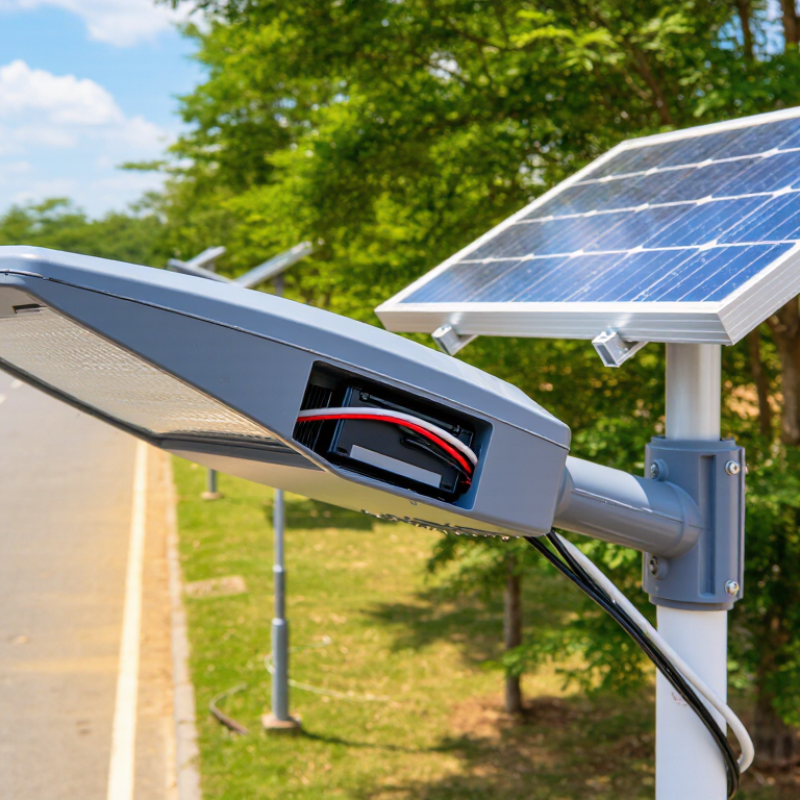
A solar street light begins with sunlight, not the lamp. During daylight, photovoltaic panels convert sunlight into electricity and charge a battery. At night, a controller releases stored energy to the LED fixture. Each part depends on the others. A shaded panel, weak battery, or damaged cable can interrupt the entire sequence.
Most failures begin gradually. Dust reduces panel output. Repeated cloudy days leave the battery undercharged. Battery capacity also declines with heat, cold, and repeated cycling. The controller may misread voltage or stop charging. Moisture can enter poorly sealed connections. Sometimes, the lamp is blamed first, although the real problem sits above it. This mistake wastes maintenance time.
Tips: Check the panel at midday for shade, dirt, cracks, and loose wiring. Measure battery voltage after charging and again before dawn. Inspect cable glands for water marks or corrosion. Confirm the controller’s charging and load indicators. A simple test log helps reveal patterns. Do not assume a bright lamp proves a healthy system. Some faults appear only after several cloudy nights. Field conditions are rarely perfect, and maintenance plans should allow for that uncertainty.
Top 10 Reasons Why Solar Street Lights Stop Working
Battery and charging faults often explain why a solar street light stays dark after sunset. A worn battery may show normal voltage during daylight, then collapse under the lamp’s load. This failure is common after repeated deep discharges or years of hot weather. Loose terminals, corrosion, and water inside the battery compartment can also interrupt current flow. The charging controller may stop protecting the battery when its sensors fail. A shaded or dirty panel creates a similar symptom. The lamp appears faulty, but it may simply receive too little energy each day.
In field inspections, technicians should check morning battery voltage, charging current, and panel voltage separately. A voltage reading alone can mislead me. It does not prove that the battery can store usable energy. Compare the battery’s performance with the lamp’s programmed runtime. Also inspect cable joints for heat marks, cracked insulation, and moisture. Battery chemistry matters, so use the manufacturer’s specified charging limits. Never bypass the controller. That shortcut can damage the battery or create a safety hazard. Cold temperatures can reduce available capacity, while excessive heat accelerates aging.
Tips: Clean the panel with suitable water and a soft cloth. Remove nearby shade, even from thin branches. Tighten terminals carefully, then protect exposed connections from moisture. Record nighttime runtime each month. Small changes reveal battery decline early. Replace batteries based on tested capacity, not appearance alone. I have trusted a bright daytime lamp before, and that assumption was wrong.
Top 10 Reasons Why Solar Street Lights Stop Working
Panel, Wiring, and Controller Faults That Reduce System Power
Solar street lights often fail because small power losses build into a complete shutdown. Dust, bird droppings, heavy shade, and cracked glass can reduce panel output during the charging hours. A loose terminal or corroded connector creates resistance, making the cable warm and the battery charge slowly. Damaged insulation may allow moisture inside. The lamp may still look normal.
Controller faults are less visible. Incorrect load settings, failed charging circuits, or a faulty light sensor can stop normal operation. Reversed polarity can damage components. A technician should measure panel voltage in sunlight, then check battery voltage and controller output separately. Do not trust a single reading. A multimeter can reveal more than a visual inspection, although testing habits are sometimes rushed.
Tips: Clean the panel with water and a soft cloth. Remove branches that cast afternoon shadows. Tighten terminals, but avoid crushing cable ends. Inspect connectors for green corrosion or dark burn marks. Check cable polarity before replacing the controller. Record voltage readings at midday and after sunset. This simple log helps identify gradual power loss. Also, inspect after rain, because dry conditions can hide water-related wiring faults.
Top 10 Reasons Why Solar Street Lights Stop Working
Solar street lights rarely fail for one reason. Field inspections often reveal several small faults working together. A burned LED module is the most visible problem. A loose connector can interrupt power without leaving obvious damage. Moisture inside the lamp housing causes corrosion and unstable lighting. Heat may also weaken the driver or shorten LED life. Dust on the lens reduces brightness, even when the lamp still operates. A simple assumption can be wrong.
Sensors create another group of failures. A dirty light sensor may detect daytime darkness and block nighttime operation. Incorrect sensor alignment can expose it to nearby lamps or reflective surfaces. A damaged motion sensor may keep the lamp dim or inactive. Technicians should check sensor wiring, mounting angles, and trigger distance. I have seen settings blamed before testing a loose sensor cable. That mistake wastes time.
Software and control settings can quietly prevent proper lighting. An incorrect clock may shift the operating schedule by several hours. Wrong dimming parameters can make a healthy lamp appear defective. Firmware errors may interrupt communication between the controller and lighting unit. A poor configuration can also disable motion-based brightness changes. Review event logs before replacing parts. Use a multimeter, inspect connectors, and compare actual behavior with programmed settings. Record the weather and battery condition, because low charge can imitate software failure.
Solar street lights rarely fail for one reason. Weather starts the chain. Heavy rain can enter poorly sealed housings, while lightning damages controllers and LEDs. Extreme heat accelerates battery aging. Dust and bird deposits reduce panel output. The IEA PVPS Task 13 report notes that soiling losses commonly reach 2–7%, with higher losses in dry regions. Shading from new trees creates another quiet problem. The lamp still works, but only briefly.
Installation errors are equally costly. Incorrect panel tilt, loose terminals, undersized cables, and reversed polarity reduce charging efficiency. A battery placed in a hot, unventilated compartment may lose capacity faster. NREL’s photovoltaic reliability studies report median module degradation near 0.5% per year, but system-level failures can appear much earlier through connectors, batteries, or controls. Field maintenance records often reveal a simple pattern: the panel is blamed first, although wiring is sometimes the real fault.
Vandalism adds cracked lenses, stolen batteries, bent poles, and disconnected cables. Neglected maintenance then allows small defects to become nighttime outages.
The ten frequent causes are
Not every failure is dramatic. A loose screw can matter. Industry reports also warn that failure statistics are difficult to compare because many studies combine component defects with installation mistakes. That limitation deserves more attention.
A solar panel stores daytime sunlight in a battery. After sunset, a controller powers the LED fixture. Each part matters.
Cloudy weather reduces charging energy. The battery may not reach full capacity, causing shorter nighttime operation or darkness before dawn.
Yes. Dust lowers energy output. Check the panel around midday for dirt, shade, cracks, and loose wiring.
A weak battery can show normal voltage without storing useful energy. Measure voltage after charging and before dawn. Voltage alone can mislead.
Loose terminals, corrosion, water, heat, and repeated deep discharges can reduce performance. Cold temperatures also lower available capacity. Small damage matters.
Moisture may enter cable joints or battery compartments. Look for water marks, corrosion, heat marks, and cracked insulation.
A dirty or misaligned light sensor may detect false daytime conditions. Check sensor wiring, mounting angles, and nearby reflective surfaces.
Yes. An incorrect clock or dimming setting can change operation. Review event logs before replacing parts. I have blamed settings too quickly before.
Check panel voltage, charging current, battery condition, controller indicators, and programmed runtime separately. Record weather and nighttime hours. Keep a simple log.
Solar street lights can stop working for many reasons, usually beginning with problems in the system’s power cycle: the solar panel collects energy, the controller manages it, and the battery stores it for nighttime use. Battery aging, insufficient charging, loose wiring, damaged panels, or controller faults can gradually reduce available power and cause the light to shut down early or remain off. This explains why do solar street lights stop working after a few months, especially when installation or component quality is poor.
Other failures may involve the lamp, motion or light sensors, programming, or internal software settings. Heavy rain, dust, extreme temperatures, shading, physical impact, and unstable mounting can also affect performance. In addition, poor installation, accidental damage, and neglected maintenance may create hidden faults that worsen over time. Regular inspections, panel cleaning, connection checks, battery testing, and timely replacement of damaged parts can help maintain reliable nighttime lighting and extend the service life of the entire system.
